October 09, 2026 | Facelift
8 minute read
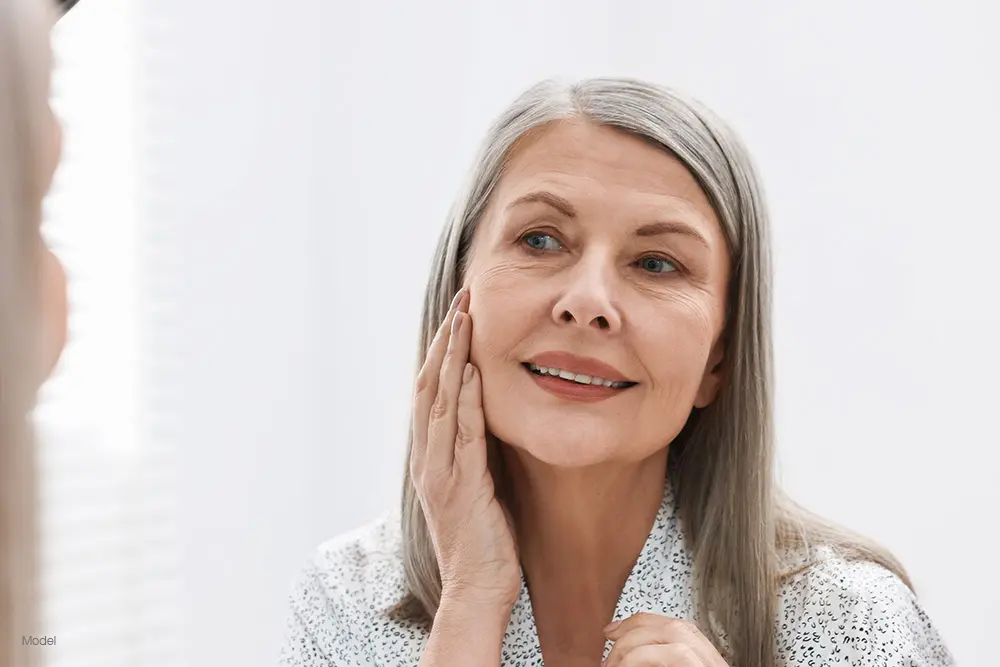
One question I occasionally hear from patients seeking facial rejuvenation is: “Am I too old for a facelift?” The short answer is that there is no specific age restriction for facelift surgery.
I have performed facelift surgery on patients well into their 70s. My oldest facelift patient was 78, and because she was healthy and active, her age did not meaningfully change my surgical plan or her recovery.
But that does not mean age is irrelevant. As we get older, medical conditions, frailty, tissue quality, and the ability to recover from a longer operation become increasingly important. When I evaluate an older patient for a facelift, I am much more interested in their physiological age than the number on their driver’s license.
Table of Contents
- Your Health Matters More Than Age Limits
- When We Modify the Plan
- Do Older Patients Recover More Slowly From a Facelift?
- Can You Still Get a Good Facelift Result When You’re Older?
- Is It Better to Have a Facelift When You’re Younger?
- What if You Think You’ve Waited Too Long?
- Is a Facelift “Worth It” When You’re Older?
- So, Can You Be Too Old for a Facelift?
- Why Choose Dr. Sean Delaney for Your Facelift Surgery?
Your Health Matters More Than Age Limits
A healthy, active 75-year-old may be a better surgical candidate than a 60-year-old with multiple poorly controlled medical conditions.
During a consultation, I look at the entire patient. That includes cardiovascular and pulmonary health, diabetes, blood pressure, medications, smoking history, mobility, nutritional status, and other medical conditions that could affect anesthesia, surgery, or healing.
I also pay attention to something that isn’t always captured by a diagnosis on a medical history form: frailty. Does the patient live independently? Do they move well? Do they have energy and vigor? Are they mentally sharp and able to understand the procedure, recovery, and postoperative instructions?
Conversely, significant physical frailty, slow mentation, forgetfulness, or loss of independence may make me more cautious, even if there isn’t one particular medical diagnosis that disqualifies the patient from surgery.
Medical clearance is important for all of my facelift patients. If I have concerns about an older patient’s ability to heal, I may also evaluate nutritional status or obtain additional testing.
When We Modify the Plan
Being older doesn’t automatically mean that I perform a different facelift. If a patient is healthy, I may perform the same operation I would for a younger patient.
The difference is that I am increasingly conscious of the overall physiological burden and duration of surgery as patients become older or develop more medical problems.
For someone with increased risk, we may recommend separating procedures that otherwise could have been performed together. We may decide that the procedure would be more appropriately performed in a hospital or ambulatory surgery center rather than an office-based surgical facility. And sometimes, the appropriate recommendation is to not have elective surgery at all.
There isn’t a formula based on age. These decisions need to be made individually.
Do Older Patients Recover More Slowly From a Facelift?
Generally, they can.
Overall health status is often a better predictor of recovery than chronological age, which is why a very healthy older patient can sometimes surprise people with how well they recover.
At the same time, older tissues tend to be more fragile, and older patients may experience more bruising or take longer to heal. This is another reason I don’t look at age in isolation.
The goal isn’t simply to determine whether someone can undergo a facelift. My goal is to determine whether we can perform the procedure safely and whether the anticipated recovery and result make sense for that individual patient.
Can You Still Get a Good Facelift Result When You’re Older?
Absolutely—but realistic expectations are particularly important.
A facelift can reposition descended facial tissues, improve jowling and neck laxity, and remove excess skin. What it cannot do is make older skin biologically young again.
Someone who has accumulated 70 years of aging will still have 70-year-old skin after surgery. Loose skin persists, nasolabial folds deepen, and other visible signs may remain to some degree, including:
- Fine lines
- Deeper wrinkles
- Crepey skin
- Loss of elasticity
- Pigmentation
- Sun damage
- Deeper structural aging
As I tell patients, we can’t erase decades of aging changes with one operation.
This doesn’t mean an older patient can’t have a dramatic improvement. It means that we need to be honest about which aspects of aging surgery can be corrected and which cannot.
For this reason, I frequently complement facelift surgery with treatments that address skin quality, such as CO₂ laser resurfacing. The exact combination depends on the patient’s skin, goals, medical history, and what can be performed safely.
Is It Better to Have a Facelift When You’re Younger?
There can be advantages to having a facelift earlier—provided you actually have enough early signs of facial aging to benefit from one.
Younger patients generally heal more quickly and tend to have better skin elasticity and tissue quality. There is also typically less advanced skin laxity to correct.
I also think about what happens over the following decades.
A patient who addresses facial laxity earlier and then maintains their appearance with good skin care, sun protection, neuromodulators, lasers, and other appropriate treatments may be able to maintain their result very well. If they eventually want another surgery when they are older, there may be less recurrent laxity to correct, and the procedure may be more of a secondary “tuck” rather than trying to reverse decades of advanced laxity within the deeper structures at once.
That doesn’t mean everyone should have a facelift at 50. Surgery should be performed when the anatomy and the patient’s goals justify it. But there can be advantages to treating aging progressively rather than waiting until it becomes very advanced.
What if You Think You’ve Waited Too Long?
Don’t assume that you’ve missed your opportunity simply because of your age.
There is almost always an opportunity to improve what you have. The more important questions are whether surgery can be performed safely and whether your expectations match what surgery can realistically accomplish.
One of the biggest reasons I would advise an otherwise healthy older patient against surgery is unrealistic expectations. If someone in their 70s expects a facelift to make them look 30 or 40 again, surgery is unlikely to make that person happy.
My goal isn’t to make someone look like a particular age. It’s to make them look refreshed, natural, and like themselves.
Is a Facelift “Worth It” When You’re Older?
That’s ultimately a very personal question.
I don’t think cosmetic surgery should be evaluated by asking whether someone is “too old to bother.” We don’t stop exercising, eating well, dressing nicely, traveling, or doing other things that make us feel good simply because we’ve reached a particular birthday.
If looking more refreshed would improve how you feel about yourself and how you enjoy your life, and you are healthy enough to pursue surgery safely, then your age alone shouldn’t determine whether it is worthwhile.
So, Can You Be Too Old for a Facelift?
You can be too medically frail for a facelift, but there isn’t a birthday or average age at which someone automatically becomes too old.
I genuinely evaluate every patient individually. I would consider an exceptionally healthy, independent, mentally sharp patient in their 80s very differently from someone substantially younger who has significant medical problems or frailty.
If you’re wondering whether you’re too old for a facelift, start by reviewing your medical history and doing your research. And even if you’re unsure whether you’re a candidate, consider coming in for a consultation and getting an honest opinion.
Sometimes the answer is yes, you’re a good candidate. Sometimes we modify the operation or the setting to make surgery safer. And sometimes my recommendation is not to have surgery.
The goal is not to operate on everyone who wants a facelift. It’s to determine whether we can safely achieve a more youthful facial shape that is meaningful, natural, and appropriate for you.
Why Choose Dr. Sean Delaney for Your Facelift Surgery?
Sean Delaney, M.D., is a dual board-certified plastic and reconstructive surgeon who specializes in complex facial surgery, whether it’s for the face, nose, eyes, neck, or a mix of such areas. These include extended deep plane facelifts for deeper tissues, rhinoplasty, eyelid surgery, fat grafting to the face, brow lifts, and certain non-surgical treatments.
He combines modern facelift techniques with compassionate, individualized surgical planning. For patients considering facelift surgery in Houston, TX, he strives to achieve a natural-looking, refreshed facial contour that still complements your unique facial features and aging patterns. You can expect to feel supported, educated, and confident from visit to recovery.
If you’re still on the fence about facelift surgery, a personal consultation with Dr. Delaney and the team at Facial Plastic Surgery Associates is the best way to make a more informed decision.
Discover More About Your Facelift and Facial Rejuvenation Options in Houston, TX
No matter your age, it’s never too late to learn more about your facial rejuvenation options. During your consultation, board-certified plastic surgeon Dr. Delaney will evaluate your facial anatomy and determine whether a facelift is right for you.
To schedule your visit today and start your journey towards natural rejuvenation for the face, call (713) 562-5665 or complete our online contact form.