
How to Choose the Best Plastic Surgeon for You
Houston Facial Plastic Surgery & Body Plastic Surgery
Choosing a plastic surgeon is an important decision, but finding the right surgeon involves more than searching online for the “best plastic surgeon” or comparing reviews and social media profiles.
Plastic surgery encompasses a wide range of procedures involving different areas of the face and body. A surgeon who has extensive experience in one area may not necessarily be the best choice for another. For this reason, one of the most important factors to consider is whether a surgeon’s training, experience, and current practice align with the specific procedure you are considering.
Board certification, specialized training, surgical experience, before-and-after results, patient safety, and postoperative care are all important considerations. You should also feel that your surgeon understands your goals and has an aesthetic philosophy that aligns with your own.
The following questions can help you evaluate a plastic surgeon and make a more informed decision about who is right for you.


1. Is the Surgeon Appropriately Trained and Board Certified?
Board certification is an important starting point when evaluating a plastic surgeon. It indicates that a physician has completed recognized specialty training and met additional standards for knowledge and competency within that specialty.
However, not all surgeons who perform cosmetic procedures have the same training. Depending on the area of practice, surgeons may come from different surgical specialties and may have different areas of expertise.
When researching a surgeon, look beyond the words “board certified” and determine which specialty the surgeon is certified in, where they completed their surgical training, and whether that training is relevant to the procedure you are considering.
Board certification alone does not tell you how frequently a surgeon performs a particular operation or whether their aesthetic approach is right for you. It should be viewed as an important foundation, followed by a closer look at the surgeon’s experience and results.
2. Does the Surgeon Have Significant Experience With the Procedure You Are Considering?
Plastic surgery encompasses procedures involving many different areas of the face and body. Even among appropriately trained surgeons, experience with individual procedures can vary considerably.
Look at what the surgeon actually does in their current practice. Ask how frequently they perform the procedure you are considering, how long they have been performing it, and whether they routinely treat patients with concerns and anatomy similar to yours.
Relevant experience can be developed through residency training, additional specialized training, and years of surgical practice. What matters most is whether the surgeon has appropriate training and meaningful experience with the procedure you are considering—not whether they followed one particular training pathway.
For more complex procedures, it may also be helpful to ask about experience with challenging cases or revision surgery. The goal is to choose a surgeon for whom your procedure and the anatomy involved are a familiar and consistent part of their surgical practice.
3. Do You Like the Surgeon’s Before-and-After Results?
Before-and-after photographs are one of the most useful ways to evaluate a plastic surgeon’s work. Rather than focusing on a single dramatic transformation, review a range of patients and look for consistent results.
Pay particular attention to patients with anatomy, concerns, or starting points similar to your own. Consider whether the results look natural and balanced and whether you would be happy with a similar outcome.
Whenever possible, look for standardized photographs with comparable lighting, positioning, and expression. For procedures whose results continue to evolve over time, it can also be helpful to see photographs taken at different stages of recovery.
No before-and-after gallery can guarantee your individual result, but it can give you a valuable sense of a surgeon’s experience and aesthetic style.
4. Does the Surgeon’s Aesthetic Philosophy Match Your Goals?
Plastic surgery combines technical execution with aesthetic judgment. Two well-trained surgeons may approach the same patient differently, which makes it important to find a surgeon whose aesthetic philosophy is compatible with your goals.
During your consultation, explain what you would like to change as well as what you want to preserve. Your surgeon should listen to those concerns and develop a treatment plan around your individual anatomy rather than applying the same approach to every patient.
Good aesthetic judgment also requires restraint. A surgeon should be comfortable recommending against a procedure when the expected benefit is limited, suggesting a less extensive treatment when appropriate, or explaining when your expectations cannot safely or realistically be achieved.
The goal should be an outcome that looks balanced and appropriate for you—not simply the greatest possible amount of change.
5. Where Will Your Surgery Be Performed and Who Will Provide Anesthesia?
Patient safety should be a central consideration when choosing a plastic surgeon. Ask where your procedure will be performed, whether the surgical facility is appropriately accredited, and who will be responsible for your anesthesia and monitoring.
Accredited surgical facilities must meet established standards related to patient safety, equipment, medications, infection control, emergency preparedness, and other aspects of surgical care.
You should also understand what type of anesthesia is planned and the qualifications of the professional providing it. The appropriate anesthetic technique varies depending on the patient and procedure, but your surgical team should be able to clearly explain the plan.
A thorough preoperative evaluation should also include your medical history, medications and supplements, previous procedures, and other factors that could influence your surgical or anesthesia risk.
6. What Does Postoperative Care Look Like?
The quality of surgical care extends beyond the operating room. Before scheduling surgery, understand what your recovery and follow-up will involve.
Ask when you will first be seen after surgery, how frequently follow-up appointments are scheduled, who will evaluate you if a concern develops, and how urgent questions are handled outside normal office hours.
Complications can occur even after appropriately performed surgery. A well-organized postoperative process helps identify potential problems early and ensures that you know whom to contact if something does not seem right.
You should feel that your surgical team will remain accessible and involved throughout your recovery rather than viewing postoperative care as an afterthought.
7. Do You Feel Comfortable With the Surgeon and the Treatment Plan?
The consultation is ultimately where you determine whether a surgeon is the right fit for you.
Your surgeon should take the time to understand your concerns, evaluate your anatomy, discuss appropriate options, and explain why a particular treatment is being recommended. You should understand the expected benefits, limitations, recovery, risks, and reasonable alternatives before deciding to proceed.
Be cautious if you feel pressured to schedule surgery, are promised a perfect result, or do not understand why a particular procedure has been recommended. It is entirely appropriate for a surgeon to tell you that you are not a good candidate for surgery or that another approach would better address your concerns.
You should leave your consultation feeling more informed—not more confused—and confident that you and your surgeon share a realistic understanding of your goals and the proposed treatment plan.
Choosing a Plastic Surgeon in Houston
At Facial Plastic Surgery Associates, our approach reflects an important principle discussed throughout this guide: the right surgeon depends in part on the procedure you are considering.
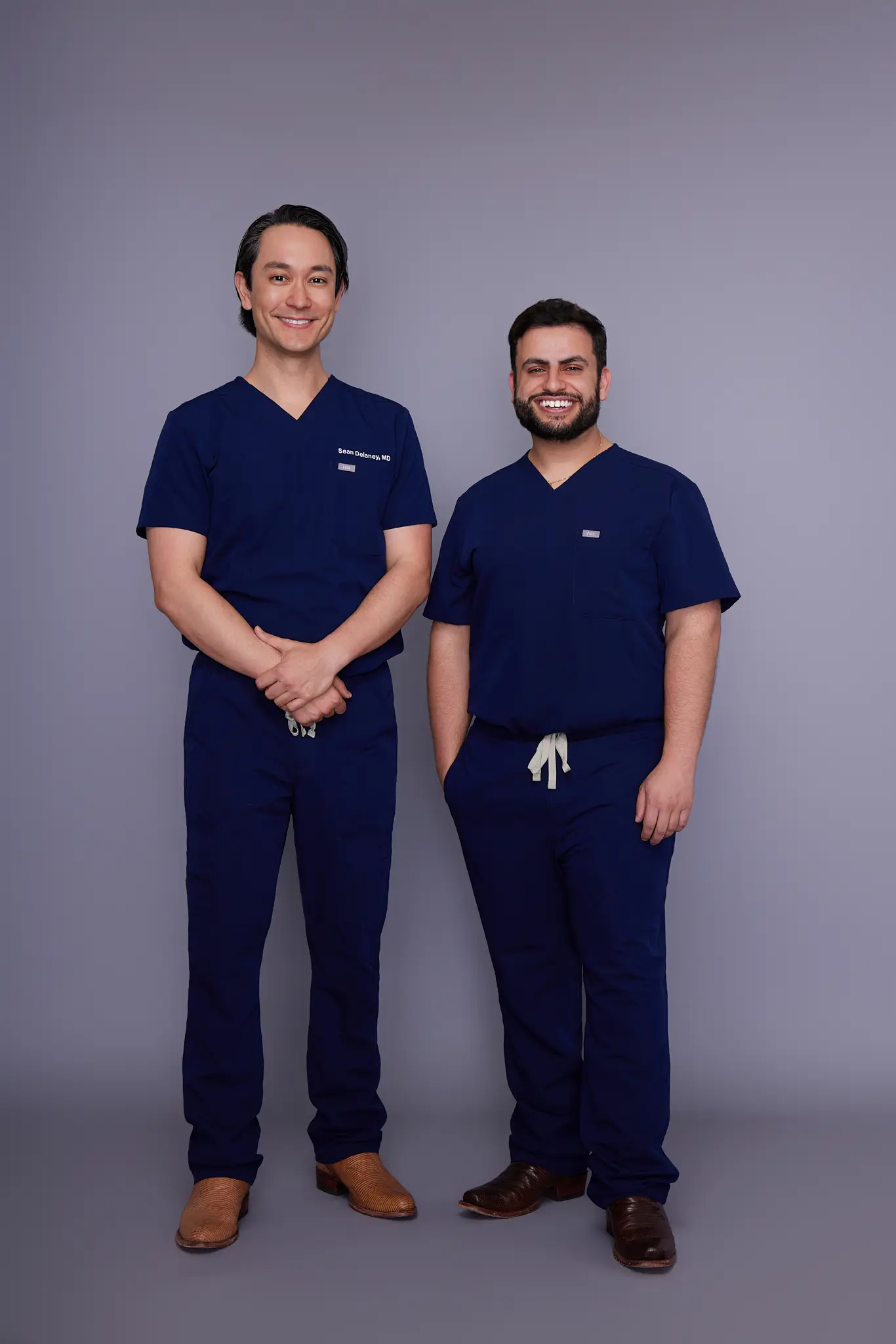
Sean Delaney, MD is a double board-certified facial plastic and reconstructive surgeon whose practice focuses on aesthetic surgery of the face and neck. His procedures include facelift and neck lift surgery, brow and eyelid surgery, rhinoplasty, facial fat transfer, and other facial rejuvenation procedures.
John Hamati, MD is a plastic surgeon whose practice focuses on aesthetic surgery of the breast and body, including breast augmentation, breast lift, breast reduction, abdominoplasty, liposuction, and body contouring procedures.
Having surgeons with complementary areas of focus allows patients to work with a physician whose training, experience, and day-to-day surgical practice are closely aligned with the procedure they are considering.
Surgery is performed in our accredited Houston surgical facility with a dedicated anesthesia team and structured preoperative and postoperative care. During your consultation, our goal is to help you understand your options, establish realistic expectations, and develop a treatment plan tailored to your anatomy and goals.
If you are considering facial, breast, or body plastic surgery in Houston, we invite you to schedule a consultation with the appropriate surgeon to discuss your goals and determine whether surgery is right for you.
Patient Reviews
At FPSA, we consider our patients family. Read some of their personal experiences.
Dr. Delaney did an amazing job with my turbinate hypertrophy and rhinoplasty surgery. He was incredibly skilled and provided thorough information throughout the process. I’m extremely happy with the results—I no longer have significant sinus problems, and I love my new nose. It’s very subtle and fits my face perfectly.
E.M.
Dr. Delaney is warm, insightful, and an excellent facial plastic surgeon. I have recently seen him for tear trough fillers; he took the time to explain the process, the tools he was using, and had no qualms with addressing any of my concerns before he began the procedures. He is passionately invested in the aesthetics and the quality of his work, while being equally concerned with his patients’ well-being and their satisfaction with the overall outcome. A wonderful doctor with comprehensive knowledge in his field, he is someone I highly recommend if you are looking for superior results and exceptional care.
W.E.
Amazing surgeon! – Dr. Delaney is the most down to earth surgeon I’ve ever met. He talks to you on a personal level is willing to discuss anything with you until your questions are answered. I never felt rushed in his office and his staff is wonderful. I am more than happy with the results of my surgery and feel 20 years younger! I highly recommend him for your cosmetic surgery needs!
Anonymous
Dr’s Kridel and Delaney are so kind and understanding. I have been seeing Dr. Kridel on and off throughout the last 45 years or so. I love his quiet calming way. As far as his talents as a plastic surgeon his education, published articles, lectures, and teaching speak for them selves. He is the best and we are so fortunate to have him right here in our own Houston area. I am also seeing Dr. Delaney for an area of his expertise and I am confident the results will be exactly as I expect, amazing.
A.N.
Women regard their faces as their lives. If you want to make some changes because of the marks left by the years on your face, Then you should find Dr. Delaney, His exquisite skills are not to be missed. Their team is caring and warm. I highly recommend this clinic.
PZ
Let's Get Social
Connect with Us on Our Social Channels
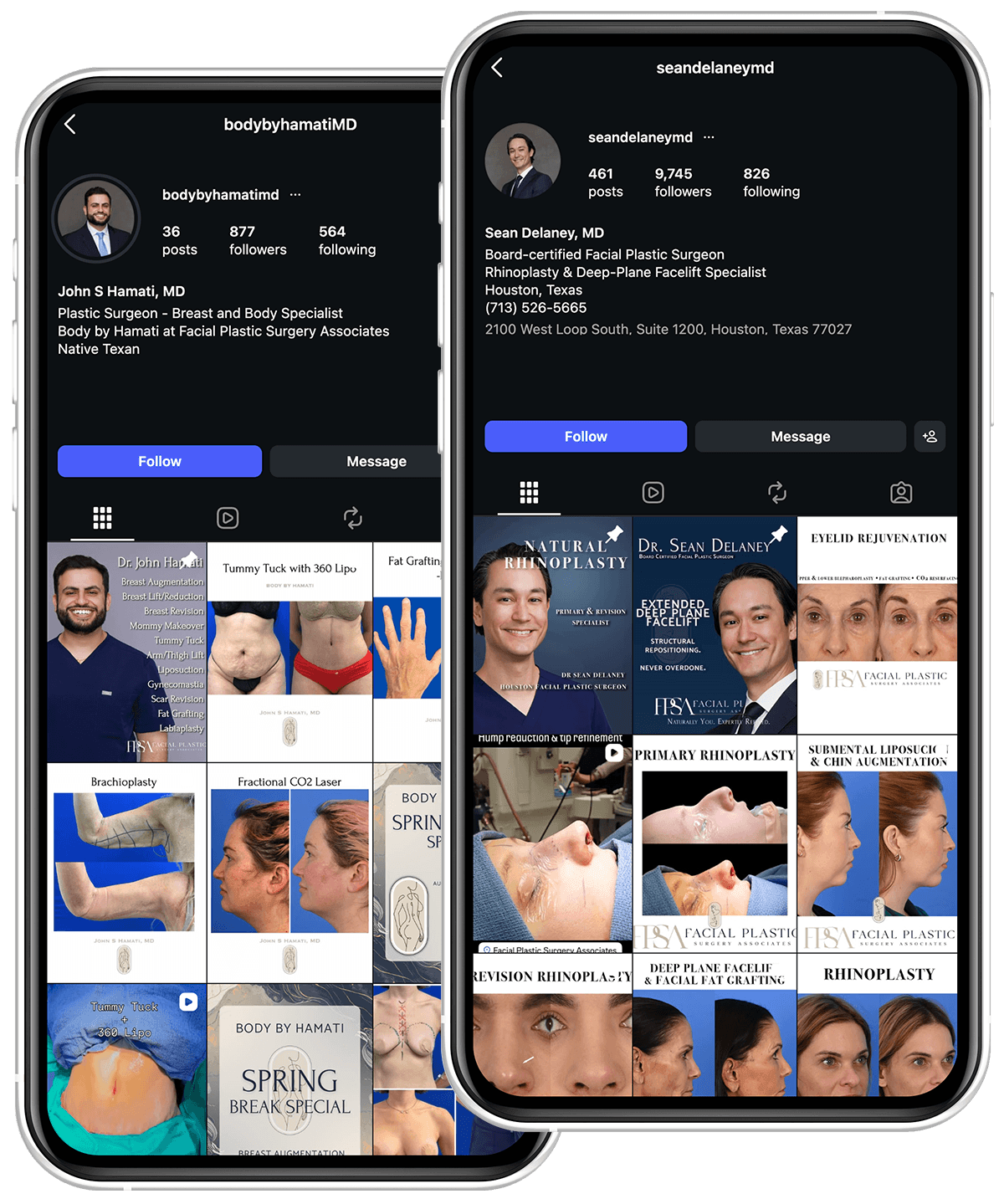
Stay connected with us on social media and witness the impact Facial Plastic Surgery Associates has on the lives of our patients.