August 21, 2026 | Facelift
10 minute read
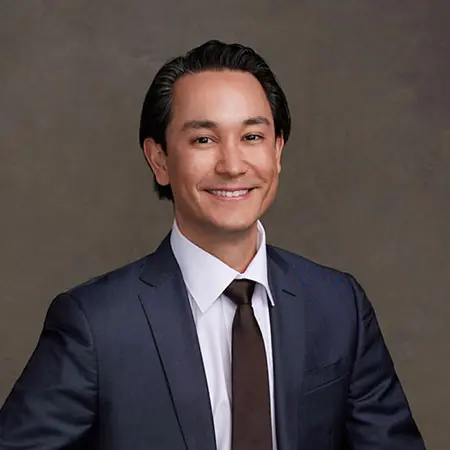
Dr. Sean Delaney, Facial Plastic Surgeon
One of the most common questions I am asked during a facelift consultation is, “What is the best age to get a facelift?”
My answer is that there really isn’t one.
I don’t believe someone suddenly becomes “old enough” for a facelift when they turn 50, 60, or any other arbitrary age. Everyone ages differently. Genetics, facial anatomy, weight changes, skin quality, sun exposure, and many other factors influence when the face and neck begin to show meaningful laxity.
Instead of focusing primarily on age, I look at a patient’s anatomy. Do I see changes that surgery can meaningfully improve?
If I do, the next question is much more personal: Is the improvement I believe I can achieve significant enough that you would be happy you underwent surgery?
That’s a decision only the patient can make.
Facelift Surgery Is About Anatomy, Not a Birthday
Two people who are exactly the same age can look very different.
One person may develop jowling and neck laxity relatively early because of genetics or facial structure. Another person may reach their 60s with relatively little lower facial laxity.
Significant weight loss can also accelerate these changes. After losing weight, some patients find that their faces look older even though they feel healthier overall, because the skin and underlying tissues have lost some of their previous volume and support.
This is why I don’t use a particular age as the threshold for facelift surgery.
If there is nothing meaningful for me to improve surgically, I will tell a patient that. Conversely, if someone is relatively young but has anatomical changes that I believe can be predictably improved, I don’t think their age alone should disqualify them from considering surgery.
Getting a Facelift in Your 40s
Facelift surgery in the 40s is becoming increasingly common, particularly among patients who want to maintain their appearance rather than wait for more advanced signs of aging.
Genetics frequently plays a major role in this group. Some people simply develop jowling, midface descent, or neck laxity earlier than others. Major weight loss can also make someone a candidate at a younger age.
These patients often tell me something along the lines of, “I don’t necessarily want to look younger. I just want to keep looking like myself.”
I think that’s a reasonable way to think about early facial rejuvenation.
Because the aging changes may be less extensive, the operation may also be more limited. Depending on the patient’s anatomy, I may recommend a more limited neck lift, a mini deep-plane facelift, or a more extensive deep-plane procedure.
The operation should fit the anatomy—not the patient’s age.
Can a Facelift in Your 40s Look More Natural?
One advantage of addressing aging earlier is that the change doesn’t necessarily have to be dramatic.
When we’re correcting relatively early descent, patients may simply look refreshed. Friends might think they lost weight, started exercising, went on vacation, or are particularly well rested.
They still look like themselves.
For many of my younger patients, that’s exactly the goal.
Does Getting a Facelift Early Mean You’ll Need Another One Sooner?
This is a reasonable concern, but I don’t think that having a facelift at a younger age means you’ve somehow “wasted” your facelift.
You continue to age after surgery. A facelift doesn’t stop the clock.
But if you have surgery at 45 and enjoy your appearance for the next decade or longer, those are years during which you were able to enjoy that result. For the right patient, that may translate into greater confidence and simply feeling happier with what they see in the mirror.
There is also evidence suggesting that earlier facelift surgery can provide durable results. A recent 30-year study of deep plane facelift patients who ultimately returned for another facelift found that those who underwent their initial surgery at age 53 or younger returned an average of 12.4 years later. Patients older than 53 at their initial surgery returned an average of 9.3 years later.
That doesn’t mean every patient will want or need another facelift on that schedule. In fact, the study only looked at patients who ultimately underwent revision surgery. But it supports something surgeons have observed clinically for years: patients who address facial aging earlier can enjoy meaningful correction for a very long time.
In my own practice, when patients undergo their first facelift in their 40s, I often think in terms of approximately 10–15 years before they might consider another one, although this varies tremendously.
Interestingly, once someone has experienced a facelift result they really like, they may also have a lower threshold for maintaining it. Rather than waiting until aging becomes severe again, they may decide to address smaller recurrent changes.
Why Your First Facelift Matters If You May Want Another One
Younger patients should also think long-term when choosing their surgeon.
If you undergo a facelift in your 40s, there is a reasonable possibility that you may eventually want another procedure later in life.
How the first operation is performed matters.
I believe it is important to respect the natural tissue planes and preserve anatomy whenever possible. Excessive scarring or disruption of normal anatomy from previous surgery can make a future facelift more difficult and potentially limit what can be accomplished.
A facelift should therefore be planned not only around how you want to look next year, but also with respect for procedures you may choose to have in 10, 15, or even 20 years.
Getting a Facelift in Your 50s
If I had to describe a “sweet spot” for facelift surgery, the 50s would probably be it—but that still doesn’t mean 50 is the correct age for everyone.
Patients in their 50s often have sufficient facial and neck aging to benefit from surgery, yet are generally still young enough to heal well.
Jowling is typically more apparent. The jawline has lost definition. The cheeks may have descended. Neck laxity and platysmal changes may be more noticeable.
The difference after surgery can therefore be substantial, yet still look natural.
Many of my facelift patients are in their 50s for exactly this reason.
Getting a Facelift in Your 60s
The 60s are also an extremely common decade for facelift surgery in my practice.
At this point, the aging changes are often more advanced, which means the improvement can be more dramatic.
However, something else becomes increasingly important: the lower face and neck haven’t aged in isolation.
The brows, eyelids, facial volume and skin have been aging too.
For this reason, patients in their 60s may benefit from complementary procedures such as a brow lift, eyelid surgery, facial fat grafting or skin resurfacing in addition to their facelift and neck lift.
That doesn’t mean everyone needs all of these procedures. They don’t.
My goal is to identify which anatomical changes are actually contributing to the patient’s symptoms and to develop a treatment plan based on those findings.
Sometimes that means an extended deep-plane face and neck lift alone. For another patient, achieving a balanced result may require addressing several areas of the aging face simultaneously.
Getting a Facelift in Your 70s
I have no problem performing facelift surgery on an appropriately selected patient in their 70s.
If someone is healthy, active, and feels good, why should an arbitrary number prevent them from wanting to look better?
At this age, however, health becomes an increasingly important part of patient selection. Elective surgery has to make sense medically, not just aesthetically.
Expectations regarding skin quality are also particularly important.
A facelift can reposition descended facial tissues, improve jowls, redefine the jawline, and improve laxity in the neck. But a facelift does not give you new skin.
A patient in their 70s will still have 70-year-old skin after their facelift.
Fine lines, sun damage, pigmentation changes, and other aspects of skin quality may require separate treatments. Skin resurfacing can sometimes complement surgery, but it’s important to distinguish between lifting facial tissues and improving the skin’s surface.
Understanding that distinction helps patients have realistic expectations about what their facelift can—and cannot—accomplish.
Are You Ever Too Young for a Facelift?
I’ve operated on appropriately selected patients in their late 30s.
Again, the question isn’t simply, “How old are you?”
It’s, “What are we treating?”
If a 38-year-old doesn’t have meaningful facial or neck laxity, there may be very little reason to perform a facelift. If another patient of the same age has significant laxity related to genetics, anatomy, or major weight loss, surgery may be a reasonable option.
The younger the patient, the more important it becomes to make sure there is a clear anatomical problem that surgery can actually improve.
Are You Ever Too Old for a Facelift?
There isn’t a specific upper age limit in my practice.
At some point, however, health rather than age becomes the limiting factor.
Facelift surgery is elective. The expected aesthetic benefit has to justify undergoing an operation, and I have to believe the procedure can be performed safely.
A healthy patient in their 70s may be a much better surgical candidate than a substantially younger patient with significant medical problems.
Should You Try Fillers or Skin Tightening Before Having a Facelift?
This is another area where I think patients sometimes get sidetracked.
Botox, fillers, lasers, and other nonsurgical treatments can be excellent treatments when they’re being used for the right problem.
But they are not replacements for a facelift when the primary problem is descended facial tissue.
I see patients who have spent years—and sometimes considerable amounts of money—trying increasingly aggressive nonsurgical treatments because they aren’t ready for surgery.
The problem is that these treatments may not be addressing the root cause.
Adding volume doesn’t necessarily correct tissue descent. Energy-based skin tightening cannot reproduce the degree of repositioning possible with surgery.
Patients can end up frustrated because they have spent significant time and money pursuing increasingly subtle improvements. In some cases, previous treatments can also alter tissue planes and make eventual surgery more challenging.
My philosophy is not that everyone should skip nonsurgical treatments and have surgery. It’s that the treatment should match the anatomical problem.
Preventative Facelift vs. Corrective Facelift
You may hear younger facelift surgery described as a “maintenance facelift” or even a “preventative facelift.”
I don’t think a facelift literally prevents aging. Nothing does.
I think of it more as addressing changes while they’re relatively limited and then maintaining that improvement as you continue to age.
There can be advantages to this approach. Smaller changes may require less correction, and the transformation can be particularly subtle. Instead of trying to reverse decades of advanced aging at once, we’re maintaining a version of the patient that already feels familiar to them.
On the other hand, some people aren’t bothered by their early aging changes at all. They may be perfectly happy waiting until their 50s, 60s or later.
Neither decision is wrong.
So, What Is the Best Age for a Facelift?
There is no correct age for a facelift.
Everyone ages differently, and everyone has a different threshold for when an aesthetic concern becomes important enough to address surgically.
Rather than following a dogmatic belief that you have to be a certain age before you’re “old enough” for a facelift, I recommend approaching the decision differently.
Do your research. Determine what specifically bothers you. Find out whether those changes are actually something that surgery can improve. Consult with a few different specialists to learn about your anatomy and options. Understand what kind of result is realistically achievable.
Then ask yourself the question that ultimately matters:
Would that improvement make me happy enough that undergoing surgery is worth it to me?
If the answer is yes, your anatomy—not the number on your birthday cake—is usually the more meaningful place to start the conversation.