November 02, 2026 | Rhinoplasty
15 minute read

One of the most common questions I hear during rhinoplasty consultations is, “Can you make my nose straight?”
The answer is usually yes. We can often make a crooked nose significantly straighter. However, achieving a perfectly straight nose is a different matter entirely.
In fact, correcting a crooked nose is one of the most challenging aspects of rhinoplasty. Unlike removing a dorsal hump or refining a bulbous nasal tip, straightening a nose involves working against structural forces, underlying facial asymmetries, and the body’s natural healing process.
Many patients don’t realize that a crooked nose is not always just a problem with the nose itself. Sometimes, the underlying cause involves the entire facial skeleton.
Understanding these limitations is important before undergoing nose surgery. Even a well-executed rhinoplasty cannot guarantee perfect symmetry.
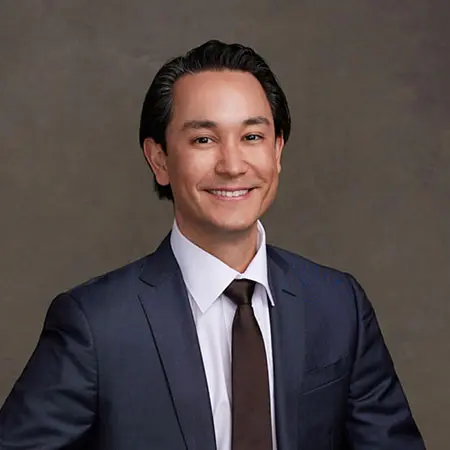
By Dr. Sean Delaney | Double Board-Certified Facial Plastic Surgeon | Houston, TX
Table of Contents
- Why Are Some Noses Crooked?
- The Connection Between a Crooked Nose and Facial Asymmetry
- Why Is a Crooked Nose Even Harder to Straighten When the Face Is Asymmetric?
- Can Rhinoplasty Actually Make a Crooked Nose Look More Crooked?
- Does a Crooked Nose Affect Breathing?
- Can Revision Rhinoplasty Fix a Nose That Is Still Crooked?
- What Is a Realistic Result for Crooked Nose Rhinoplasty?
- Final Thoughts: Straightening the Nose Is Only Part of the Goal
- Why Choose Dr. Sean Delaney for Your Rhinoplasty?
- Frequently Asked Questions About Crooked Nose Rhinoplasty
- Learn More About Rhinoplasty Surgery in Houston, TX
Why Are Some Noses Crooked?
Crooked noses generally fall into two broad categories: those that develop naturally during facial growth and those that result from trauma.
Congenital Nasal Deviation
Some people develop a crooked nose as their face grows. In these patients, the right and left sides of the nose may develop differently, resulting in differences in cartilage size, shape, or position.
More importantly, the underlying facial skeleton is often asymmetric as well.
For example, the maxilla, or upper jawbone, may be more prominent on one side than the other. One side of the face may also sit slightly higher or lower.
Think of the face as the house foundation and the nose as a structure built on it. If the foundation is uneven, making the structure perfectly straight becomes much more difficult.
Rhinoplasty can reshape and reposition the nasal bones and cartilages, but it cannot fundamentally change the underlying facial skeleton.
This is one reason congenital nasal deviations can be particularly difficult to correct completely.
Post-traumatic Nasal Deviation
Other patients develop a crooked nose following an injury, such as a sports accident, fall, or nasal fracture.
In these cases, the nose may have been relatively straight before the trauma, with the injury displacing the nasal bones, septum, or surrounding cartilages.
Post-traumatic deviations can sometimes be more amenable to correction because we’re attempting to restore structures that were previously more symmetric.
However, there’s an important caveat. I often see patients who become much more attentive to the appearance of their nose after an injury. They may assume that every asymmetry they notice resulted from the trauma, when in reality, some of those differences existed beforehand.
That is why evaluating the entire face—and reviewing pre-injury photographs when available—can be helpful.
The Connection Between a Crooked Nose and Facial Asymmetry
One of the most important concepts I explain to rhinoplasty patients is that the nose does not exist independently of the rest of the face.
Almost everyone has some degree of facial asymmetry. One eyebrow may sit higher than the other, one cheek may project farther forward, or the chin may be slightly off-center.
These differences are normal, but they become particularly important when trying to straighten a crooked nose.
What Happens When the Facial Midlines Don’t Match?
Imagine drawing a vertical line through the center of someone’s forehead and another through the center of their upper lip.
Ideally, these lines would align. However, in patients with significant facial asymmetry, they may not.
This creates an interesting surgical dilemma: If the upper and lower portions of the face don’t share the same midline, what exactly does it mean to make the nose straight?
In these situations, I generally aim to align the upper portion of the nose with the brow region and the lower portion with the Cupid’s bow of the upper lip.
Rather than forcing the nose to follow an imaginary perfectly vertical line, the goal is to create a balanced appearance that harmonizes with the surrounding facial structures.
Sometimes, a nose that isn’t mathematically straight can actually look more natural within an asymmetric face.
What Uneven Nostril Attachments Can Tell Us
One subtle feature I routinely examine during rhinoplasty consultations is the height at which each nostril attaches to the face.
In some patients, one nostril attaches noticeably higher than the other.
This can be a clue that the underlying maxilla is asymmetric. For example, the inside portion of the upper jaw may be positioned farther back on one side, affecting the support and position of the nostril base.
I specifically point this out to patients because most have never noticed it.
Why does it matter?
Even if we successfully straighten the nasal bridge and tip, the nostril attachments may remain uneven because their position is influenced by the underlying facial skeleton.
There are surgical techniques, including grafts placed near the nostril base, that can attempt to improve these differences. However, in my experience, these techniques have limited effectiveness when significant skeletal asymmetry is present.
This is why I caution patients that rhinoplasty may improve nostril symmetry without making both sides identical.
Why Is a Crooked Nose Even Harder to Straighten When the Face Is Asymmetric?
When a crooked nose is associated with facial asymmetry, straightening it becomes particularly challenging. I often compare this to trying to make a house look perfectly symmetrical when it’s built on an uneven foundation. You can straighten the walls and adjust the roofline, but if the underlying foundation is asymmetric, the house may never look perfectly balanced from every angle.
The nose is similar. We can straighten the nasal bones and cartilage, but we’re still working with the underlying facial skeleton, which may be asymmetric. This can limit how perfectly straight the nose appears, even after a technically successful operation.
The difficulty of crooked nose rhinoplasty also goes well beyond simply moving the nasal bones into a better position. The nose is a complex structure composed of bone, cartilage, ligaments, and soft tissue. These components are interconnected, and changing one can influence the others.
For example, the nasal septum is not simply an internal wall separating the nostrils. It is structurally integrated with the nasal bridge and plays an important role in supporting the nasal framework.
When correcting a crooked nose, I almost always need to address the septum to some degree. Frequently, the surrounding cartilages are asymmetric as well.
Successful correction may require releasing tissue attachments, repositioning cartilage, reconstructing the septum, and reshaping the nasal bones.
But even after doing all of this, another challenge remains: keeping the nose straight as it heals.
Why Can a Crooked Nose Become Crooked Again After Surgery?
One of the most frustrating aspects of crooked nose rhinoplasty is that a nose that appears remarkably straight immediately after surgery may gradually develop some recurrent deviation as it heals.
Why does this happen?
The nasal cartilages may retain internal stresses related to their original shape. Scar tissue can contract as it matures, and the surrounding soft tissues continue to exert forces on the reconstructed framework.
During surgery, we can release many of these forces and reconstruct the nasal framework. However, we cannot completely control how the tissues will heal or eliminate every force acting on the nose.
Underlying facial asymmetry can add another layer of difficulty. If the skeletal foundation supporting the nose is asymmetric, achieving and maintaining perfect alignment may be especially challenging.
This doesn’t necessarily mean something went wrong during surgery. It reflects the biological and mechanical limitations of correcting an asymmetric structure.
Why I Don’t Pursue Perfection at Any Cost
When performing crooked nose rhinoplasty, I work to release the forces contributing to the deviation and reposition the nasal structures as much as reasonably possible.
However, I also recognize that aggressively pursuing the last millimeter of straightening can create new problems.
Excessive manipulation or weakening of the nasal framework can compromise structural support, affect breathing, or create new deformities.
My goal is to achieve meaningful improvement while preserving a stable, functional nose.
I consider a small residual deviation acceptable when the overall result looks natural and harmonious with the face.
Can Rhinoplasty Actually Make a Crooked Nose Look More Crooked?
Surprisingly, yes.
This is one of the most important—and frequently overlooked—topics I discuss during rhinoplasty consultations.
Imagine a patient with three concerns:
- A prominent hump on the bridge of the nose
- A large, bulbous nasal tip
- A mild nasal deviation
Before surgery, the patient’s attention is primarily drawn to the hump and bulbous tip. The crookedness may seem relatively unimportant.
After rhinoplasty, the hump has been removed, and the tip is more refined. Suddenly, the remaining deviation becomes much more noticeable.
This happens for two reasons.
First, removing prominent or distracting features can shift attention toward smaller imperfections that were previously overlooked.
Second, refining and narrowing the nasal contours can make existing asymmetries objectively easier to see. More defined dorsal aesthetic lines may reveal subtle deviations that were less apparent when the nose was wider or less refined.
As a result, a patient may feel that their nose looks more crooked even though the surgery improved its overall appearance.
Why I Point Out Asymmetries Before Surgery
During every rhinoplasty consultation, I carefully examine the nose and surrounding facial structures, identify preexisting asymmetries, and document these findings in the patient’s medical record.
I specifically point out deviations that patients may not have noticed themselves.
Sometimes patients acknowledge these differences but aren’t particularly concerned because they’re focused on other features they want corrected.
However, after surgery, their perspective may change.
Once the hump or bulbous tip has been improved, the residual asymmetry can become their primary concern—even when we discussed beforehand that complete correction might not be possible.
This is why I believe candid preoperative counseling is so important.
I would much rather have a patient understand the limitations of surgery before proceeding than develop unrealistic expectations about what rhinoplasty can accomplish.
Does a Crooked Nose Affect Breathing?
A crooked nose is not always purely cosmetic.
Many patients with visible nasal deviation also have a deviated septum or other internal structural abnormalities that can interfere with breathing.
However, the relationship between external appearance and nasal function is not always straightforward.
Some patients have significantly crooked noses but breathe relatively well. Others have relatively straight-looking noses with substantial internal obstruction.
Every component needs to be evaluated individually.
The nasal bones, septum, upper lateral cartilages, nasal valves, and tip-support structures all contribute to the appearance and function of the nose.
Because the septum is structurally connected to the nasal dorsum, correcting an external deviation frequently requires septal reconstruction as well.
In some situations, attempting to achieve additional cosmetic straightening could compromise nasal support or breathing.
When faced with that tradeoff, I prioritize preserving function and structural stability rather than pursuing perfect symmetry.
After all, a nose that looks straight but doesn’t breathe properly is not a successful outcome.
Can Revision Rhinoplasty Fix a Nose That Is Still Crooked?
Revision rhinoplasty can sometimes improve residual nasal deviation, but these procedures are often considerably more challenging than primary rhinoplasty.
Correcting a crooked nose is difficult even when the nasal structures have never been operated on.
Previous surgery introduces additional obstacles.
Scar tissue can restrict the movement of cartilage and soft tissue. Portions of the nasal framework may have been removed, weakened, or repositioned. The available cartilage for reconstruction may also be limited.
These factors make additional straightening more technically demanding and less predictable.
However, there’s another important consideration.
A Crooked Nose After Rhinoplasty Doesn’t Necessarily Mean the First Surgery Failed
I occasionally meet patients seeking revision rhinoplasty who believe their previous surgeon failed to straighten their nose adequately.
Sometimes, however, the remaining deviation is related to underlying facial asymmetry that could not have been completely corrected through rhinoplasty alone.
In these situations, the problem may not be that the original surgery was poorly performed. Rather, the patient may not have fully understood the anatomical limitations of what surgery could accomplish.
A second operation cannot necessarily overcome those same limitations.
I am particularly cautious when patients seek revision surgery for very small residual deviations.
Rhinoplasty is not a procedure in which we can precisely control every millimeter of the final result. The nose must heal, and healing introduces variables that cannot be perfectly predicted.
If I’m not confident that another operation can produce a meaningful improvement, I believe it’s better to explain that limitation than recommend surgery that may offer little benefit while introducing additional risk.
Sometimes, the best surgical decision is not to operate.
What Is a Realistic Result for Crooked Nose Rhinoplasty?
Full results from rhinoplasty tend to be revealed after about a year. However, the most important question isn’t whether rhinoplasty made your crooked nose perfectly straight. It’s whether surgery can create a meaningful improvement that looks natural, functions well, and complements the patient’s overall facial anatomy.
For some patients, the improvement can be dramatic. For others, particularly those with significant underlying facial asymmetry or previous nasal surgery, the degree of correction may be more limited.
I encourage patients to think about the overall appearance of their face rather than focusing on whether every individual structure is perfectly symmetric.
In my practice, I define a successful rhinoplasty by three things:
- A natural appearance: The nose should complement the surrounding facial features rather than draw unnecessary attention to itself.
- Good nasal breathing: Cosmetic improvements should not come at the expense of function.
- Improved confidence: The patient should feel better about their appearance without becoming preoccupied with achieving impossible perfection.
A perfectly straight nose is not necessarily a better nose, particularly when the rest of the face is naturally asymmetric.
The goal is harmony, not mathematical perfection.
Final Thoughts: Straightening the Nose Is Only Part of the Goal
Crooked nose rhinoplasty is one of the most technically demanding procedures in facial plastic surgery because it requires more than simply reshaping the nose.
It requires understanding the relationship between nasal anatomy, facial skeletal asymmetry, structural support, and the forces that influence healing.
In some patients, we can achieve substantial straightening. In others, the underlying anatomy imposes limitations that surgery cannot fully overcome.
My responsibility as a surgeon is not simply to explain what I can improve, but also to be candid about what I cannot.
Why Choose Dr. Sean Delaney for Your Rhinoplasty?
Sean Delaney, M.D., is a double board-certified facial plastic surgeon in Houston, Texas, specializing in cosmetic and functional rhinoplasty, including primary and revision nasal surgery. He applies advanced facial rejuvenation techniques to your surgical plan, tailoring your treatment to your unique anatomy while upholding the highest standards of safety and comfort.
Rather than trying to create a perfectly straight nose for every patient, Dr. Delaney aims to create a natural-looking nose that breathes well, complements the face, and gives the patient greater confidence. This individualized approach will allow you to feel supported, educated, and reassured throughout your surgical journey.
If you’re considering rhinoplasty to correct a crooked nose, a comprehensive consultation with Dr. Delaney can help determine the underlying causes of your deviation, what improvements may be possible, and what limitations you should realistically expect.
Frequently Asked Questions About Crooked Nose Rhinoplasty
Can rhinoplasty completely straighten a crooked nose?
Rhinoplasty can often significantly improve nasal deviation, but complete straightening cannot be guaranteed. The outcome depends on the severity of the deviation, underlying facial asymmetry, cartilage structure, previous injuries or surgeries, and the healing process.
Is a congenitally crooked nose harder to fix than a broken nose?
It can be. Congenital deviations frequently involve differences in the development of the nasal cartilages and underlying facial skeleton. Posttraumatic deviations may be more amenable to correction when the nose was relatively symmetric before the injury. However, every case is different.
Why does my nose still look crooked after rhinoplasty?
Residual deviation may result from underlying facial asymmetry, persistent differences in cartilage shape, scar contracture, or the natural forces acting on the nose during healing. A residual deviation does not automatically indicate that the surgery was unsuccessful.
Can a nose become crooked again after rhinoplasty?
Yes. Even when the nose is straightened during surgery, cartilage and soft-tissue tension, scar formation, and asymmetric skeletal support may contribute to some recurrent deviation during healing.
Can rhinoplasty fix uneven nostrils?
Rhinoplasty can sometimes improve nostril asymmetry. However, when uneven nostril attachments are related to differences in the underlying maxilla or facial skeleton, complete correction may not be possible.
Can a crooked nose cause breathing problems?
Yes. Crooked noses are frequently associated with septal deviation or other internal structural abnormalities. However, some patients with significant external deviation breathe normally, while others with relatively straight noses experience obstruction. A complete nasal examination is necessary to determine the cause.
Is revision rhinoplasty worth it for a slightly crooked nose?
Not always. When the residual deviation is minor, the potential improvement may not justify the additional risks of surgery. Scar tissue, weakened cartilage, and unpredictable healing can make small corrections particularly difficult to achieve reliably.
Learn More About Rhinoplasty Surgery in Houston, TX
Rhinoplasty surgery is a highly customizable procedure tailored to your unique features and aesthetic goals. Double board-certified plastic surgeon Dr. Delaney and his team will take the time to evaluate your facial anatomy and develop a personalized surgical plan that enhances your natural appearance while staying true to you.
Begin your journey toward a more balanced, refined nose. Schedule your consultation by calling (713) 562-5665 or completing our online contact form today.