April 27, 2026 | Facelift, Uncategorized
6 minute read
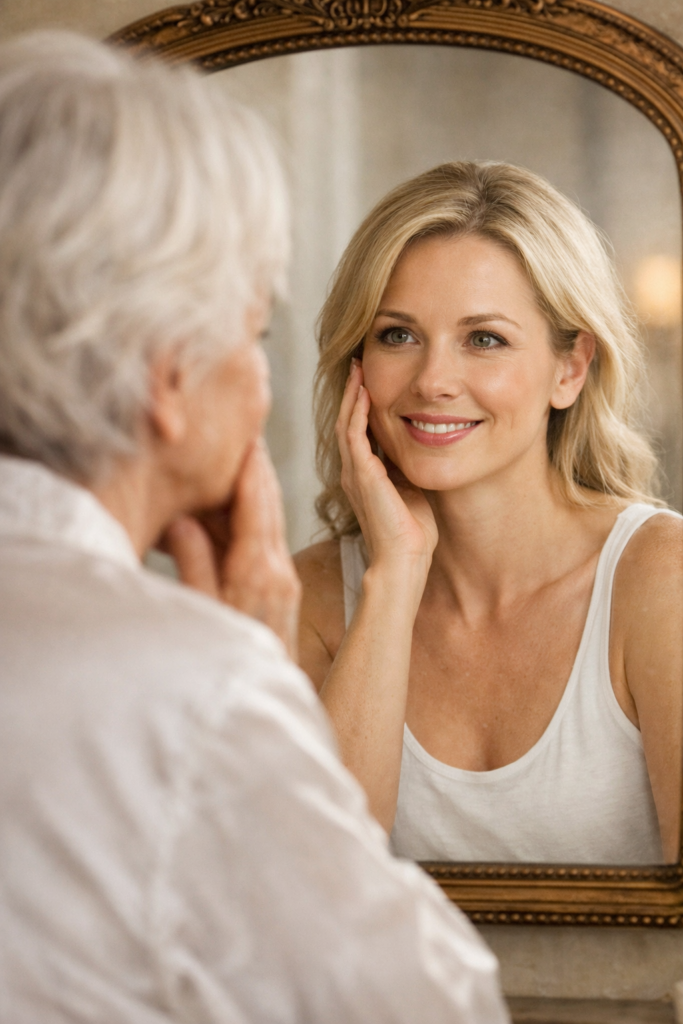
Aging is universal. It happens to every face, in every decade, and in every person a little differently. But one of the most common things I hear from patients is not simply, “I look older.” It is something much more personal:
“I still feel like myself—I just don’t look like myself anymore.”
That disconnect is often what brings people to consider facial rejuvenation. They still feel vibrant, healthy, energetic, and engaged—but when they look in the mirror, the reflection no longer matches how they feel inside.
The good news is that modern facial rejuvenation has evolved. To understand how to age well—and how to restore a more natural, refreshed appearance—we first need to understand what is actually changing in the face over time.
Facial Aging Is More Than Skin Deep
One of the most common misconceptions about facial aging is that it is primarily a skin problem.
It is not.
Wrinkles, sun damage, pigmentation, and skin laxity are certainly visible signs of aging—but they are only part of the story. Facial aging is not just a surface issue. It is a three-dimensional, structural process that unfolds gradually over decades and affects every layer of the face.
Facial aging is best understood as the combination of three major changes:
- Skin changes
- Volumetric changes
- Structural descent
This distinction matters because treating the wrong layer often leads to the wrong result.
The Face Ages in Layers
To understand facial aging, it helps to think of the face in layers. The face is not simply skin draped over bone. It is a dynamic, layered structure made up of:
- Skin
- Fat
- Muscle and connective tissue
- Bone
Each of these layers changes over time, and each contributes to how the face ages. That is why facial aging is rarely caused by one single issue—and why natural facial rejuvenation requires a more thoughtful, layered approach.
1. Skin Changes: What You See First
Skin is the most visible part of the face, so it is often the first place people notice aging. Over time, skin undergoes several predictable changes:
- Ultraviolet (UV) damage
- Collagen loss
- Elastin breakdown
- Changes in texture and pigmentation
These changes lead to fine lines, wrinkles, roughness, thinning, discoloration, and loss of elasticity. Skin changes matter—but they are not the primary driver of facial aging. They are best thought of as the outermost expression of deeper structural changes. Skin often amplifies aging, but it rarely causes it. This is why skin treatments alone—while valuable—can only do so much.
2. Volumetric Changes: More Than “Volume Loss”
As we age, the face does lose volume—but not in the simplistic way many people think. Over time, we experience:
- Fat atrophy (loss of facial fat in key support areas)
- Bone remodeling (subtle changes in the facial skeleton)
These changes reduce structural support and alter facial contours, particularly in the cheeks, temples, around the eyes, and jawline. This contributes to hollowing, flattening, and a more tired appearance. But volume loss is only part of the picture.
One of the most important ideas in facial aging is this:
We do not just lose volume—we lose position.
That distinction is critical.
3. Structural Descent: The Missing Piece
This is the most overlooked—and often most important—part of facial aging. As we age, facial tissues do not simply shrink. They also shift downward. This process is called tissue descent, and it affects all layers of the face, including the deeper structural support system beneath the skin. As tissues descend:
- Cheeks flatten and fall
- Nasolabial folds deepen
- Jowls develop
- Jawlines soften
- The neck becomes heavier
This creates one of the most misunderstood features of aging: areas that appear “deflated” are often not truly empty—they are displaced. What many people interpret as volume loss is often a loss of position. That is a very different problem—and it requires a different solution.
The Role of the SMAS: Why Structure Matters
Beneath the skin lies one of the most important layers in facial aging: the SMAS (Superficial Musculoaponeurotic System). The SMAS is the deeper support layer of the face. It helps support soft tissues and plays a central role in facial expression and movement. As the SMAS loosens and descends over time, the tissues attached to it descend as well. This is one of the primary structural reasons the face begins to sag. It is also why simply tightening skin does not create the most natural result. To restore youthful contours in a meaningful way, we often need to address the deeper support system—not just the surface.
Why Many Treatments Fall Short
Many aesthetic treatments focus on only one layer of aging. That is often where problems begin.
Volume Alone Is Not Enough
Filler and other volume-based treatments can improve hollowing—but they cannot reposition descended tissue. When volume is used to compensate for structural descent, the result is often:
- Overfilled cheeks
- Blunted contours
- Heaviness in the midface
- A less natural appearance
This is one of the most common reasons patients begin to look “done” rather than refreshed.
Skin Treatments Alone Are Limited
Laser resurfacing, peels, and skincare can improve:
- Texture
- Pigment
- Fine lines
- Surface quality
But they do not lift deeper structures or restore facial support. These treatments are excellent refinements—but they are not substitutes for structural correction when deeper descent is the true issue.
A More Natural Approach to Facial Rejuvenation
The most natural facial rejuvenation begins with understanding what has actually changed. That means treating the right layer, in the right way, for the right patient. A structural approach to facial rejuvenation often includes:
Repositioning What Has Fallen
In the right patient, modern facelift techniques can reposition descended tissues and restore natural facial structure—not simply tighten skin.
Restoring What Has Been Lost
Volume still matters. In selected patients, facial fat transfer or carefully placed filler can restore support and balance.
Refining the Surface
Skin quality can then be improved with treatments such as:
- CO2 laser resurfacing
- Medical skincare
- Pigment correction
These treatments improve the surface after structure has been restored. When approached in this order, rejuvenation becomes more logical—and more natural.
What Patients Actually Want
Most patients are not looking to look different.
They are not asking to look “done.”
They are not asking to look tight.
They are not asking to look like someone else.
What most patients actually want is remarkably consistent:
- Familiarity
- Balance
- Subtlety
They want to look like themselves again—just more rested, more refreshed, and more aligned with how they still feel inside. That is the real goal of modern facial rejuvenation.
The Goal Is Not to Change You
The best facial rejuvenation should not make you look like someone else. It should help you look like yourself again. When we understand where facial aging truly happens—and treat it thoughtfully, layer by layer—we can achieve results that feel natural, balanced, and entirely your own. Because the goal is not to change who you are. It is to bring you back to yourself.